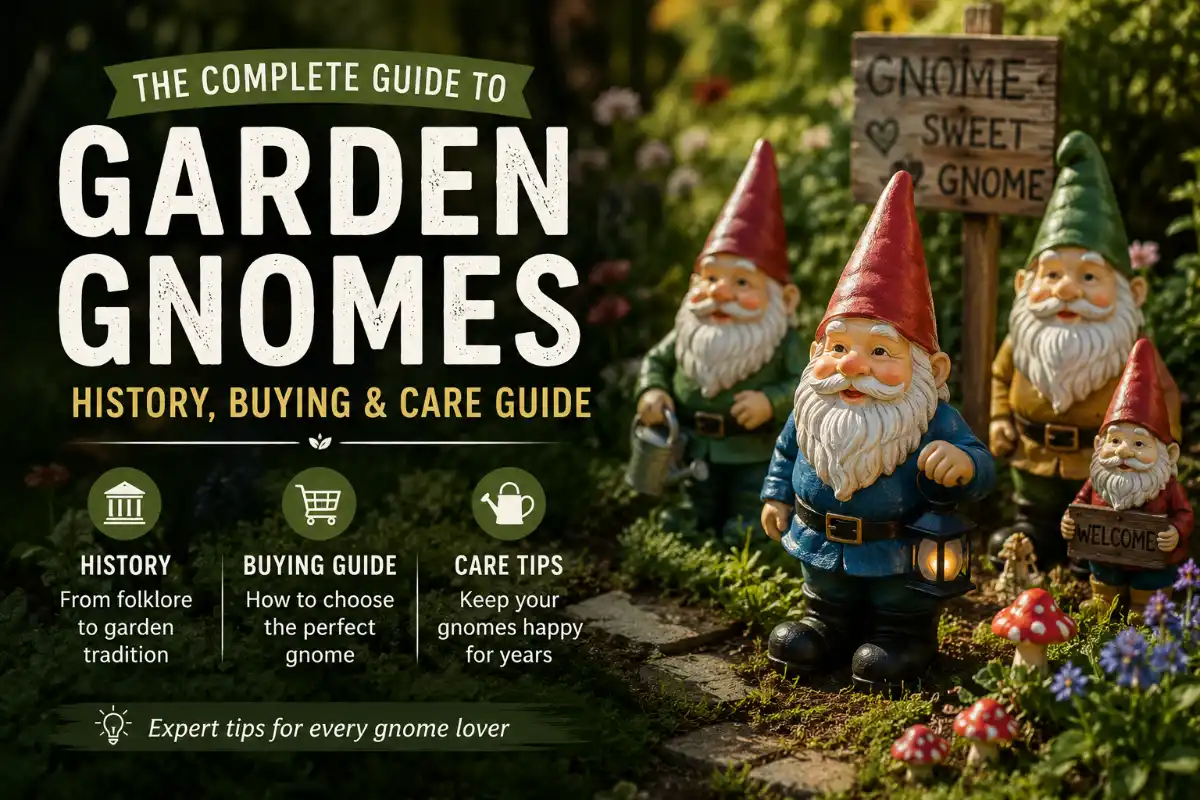
Garden gnomes are decorative statues inspired by European folklore and 19th-century German ceramic craftsmanship. Today, they add personality to lawns, flower beds, patios, balconies, containers, and indoor plant displays, with styles ranging from traditional red-hatted figures to minimalist sculptures and funny garden gnomes.
The right gnome should complement the setting rather than simply fill space. This guide explains their history, symbolism, materials, styles, placement, buying considerations, collecting basics, and maintenance so you can make a confident choice.
What are garden gnomes?
Garden gnomes are ornamental figures usually depicted as small, bearded characters wearing pointed hats and practical clothing. Traditional figures often hold lanterns, shovels, wheelbarrows, fishing rods, or watering cans, reflecting their association with gardens and outdoor work.
The German word Gartenzwerg means “garden dwarf.” Modern uses are primarily decorative, but the design draws on folklore about small earth-associated beings connected with underground life, cultivated land, and protection.
Garden gnome history: a documented timeline
The familiar garden figure developed from European folklore and German ceramic manufacturing rather than from one single inventor. Several workshops and places contributed to its evolution, so claims about the “first” garden gnome should be treated cautiously.
| Period | Milestone |
| 16th century | Paracelsus describes gnomes as beings associated with the earth in Renaissance writing |
| 1841 | Dresden firm Baehr and Maresch advertises ceramic figures described as “dwarves” or “little folk” |
| 1847 | Sir Charles Isham brings 21 terracotta gnomes from Germany to Lamport Hall in Northamptonshire, creating the earliest well-documented British display |
| Mid-to-late 1800s | Gräfenroda, Thuringia, becomes a major center for terracotta and ceramic gnome production |
| 1870s onward | Workshops associated with Philipp Griebel, August Heissner, and Romeiss help establish Gräfenroda’s reputation in the garden ornament industry |
| Late 19th century | Gnomes become more visible in Victorian British and European gardens |
| 20th century | Concrete, plastics, and later resin make decorative figures more accessible and weather-tolerant |
| Present day | Traditional, novelty, collectible, solar, and contemporary styles are sold internationally |
- Read more: Garden Gnomes
Folklore and earth symbolism
Paracelsus described gnomes as elemental beings associated with the earth. That concept helped create the lasting connection between gnomes, soil, minerals, hidden places, and garden protection.
This background explains the traditional look: boots, beard, pointed hat, lantern, and garden tool suggest a small worker suited to a landscape rather than an indoor decorative figure.
German manufacturing origins
The modern Gartenzwerg developed strongly through German pottery and ceramic production. The Dresden company Baehr and Maresch had small ceramic dwarf-like figures in stock by 1841, while Gräfenroda later became the leading center for the style.
Philipp Griebel is among the best-known Gräfenroda makers. His workshop remains important to the subject’s history, although the exact claim that any one maker invented the first garden gnome is disputed. The evidence supports a more accurate conclusion: multiple makers helped develop and popularize the form in 19th-century Germany.
Victorian adoption in Britain
Garden gnomes entered British garden culture during the Victorian era. Sir Charles Isham is widely associated with bringing 21 German terracotta figures to Lamport Hall in 1847, where he displayed them in a rock garden.
Their adoption suited the Victorian interest in ornamental planting, picturesque landscapes, rockeries, and decorative objects. Over time, the figures moved from estate gardens into ordinary domestic gardens and became recognizable lawn ornaments.
What do garden gnomes symbolize?
Garden gnomes have no single universal meaning. Their symbolism depends on folklore, regional traditions, and personal interpretation, but several associations appear frequently.
| Association | Meaning in garden décor |
| Protection | A symbolic guardian of a home, garden, or cultivated plot |
| Good fortune | A cheerful sign of hope, prosperity, or successful growing |
| Connection to nature | A visual link to soil, plants, woodland settings, and seasonal change |
| Hard work | A reminder of practical gardening through tools, lanterns, and work clothes |
| Hospitality | A welcoming accent near a gate, porch, or patio |
| Humor | A playful statement of personality through novelty or funny designs |
For many homeowners, a gnome does not need folklore to be meaningful. It may simply provide a focal point in a border, a surprise along a path, or a touch of color against foliage.
Garden gnome myths vs. facts
Myth: Garden gnomes are based on real creatures
Fact: They are decorative figures inspired by folklore, literature, and later garden ornament traditions. No evidence establishes gnomes as real beings.
Myth: Every gnome is German
Fact: German workshops played a central role in developing the modern garden gnome, especially through 19th-century ceramic production. The figures are now made and enjoyed around the world.
Myth: Gnomes must wear red hats
Fact: The red pointed hat is the most familiar traditional convention, but it is not essential. Contemporary versions may use natural stone colors, metallic finishes, seasonal clothing, or abstract forms.
Myth: A garden gnome guarantees good luck
Fact: Luck and protection are symbolic associations, not measurable outcomes. A gnome can make a garden feel more personal and welcoming, but it cannot guarantee gardening success.
Myth: All outdoor garden gnomes can remain outside year-round
Fact: Material, finish, drainage, and climate determine whether a figure can stay outside. Terracotta and ceramic are especially vulnerable to frost, while resin and concrete also need protection from prolonged standing water and damage.
Types of garden gnomes
Garden gnome statues now suit many decorating styles. The most successful choice either blends into the garden’s visual language or creates a deliberate contrast.
Traditional garden gnomes
Traditional designs usually include a pointed cap, white beard, boots, and a working pose. They are especially effective in cottage gardens, herb plots, rose borders, rustic patios, and vegetable gardens.
Funny garden gnomes
Funny garden gnomes use exaggerated poses, signs, animals, jokes, and unexpected activities. They work best as a single feature or within one defined theme rather than scattered throughout every planting area.
Woodland and fairy-garden gnomes
Woodland styles often include mushrooms, lanterns, acorns, tree-stump details, mossy textures, and forest animals. Use them beneath trees or beside ferns, hostas, logs, shade-loving plants, and natural stone.
Modern and minimalist gnomes
Contemporary designs may use monochrome colors, clean geometry, smooth surfaces, stone effects, or metal finishes. These pair well with gravel gardens, architectural grasses, large planters, modern paving, and restrained planting schemes.
Solar and functional gnomes
Some garden ornaments include solar lights, welcome signs, planters, or bird-feeding features. These can add function, but check for reliable drainage, adequate sunlight for solar panels, and easy access for cleaning or replacement parts.
Seasonal garden gnomes
Seasonal figures may feature winter hats, harvest themes, beachwear, or holiday decorations. Rotate them rather than displaying them all year; this keeps the garden fresh and reduces weather exposure for more delicate finishes.
Material comparison: resin, concrete, terracotta and more
The material affects appearance, weight, stability, maintenance, and weather suitability. No single choice is best for every garden.
| Material | Best for | Advantages | Limitations |
| Polyresin | Patios, balconies, containers, borders | Lightweight, detailed, easy to reposition | May chip, fade, or become brittle over time |
| Concrete or cast stone | Lawns, permanent borders, windy sites | Heavy, stable, substantial appearance | Difficult to move; damaged pieces can crack further in freeze-thaw conditions |
| Terracotta | Sheltered cottage gardens | Traditional handmade character and warm color | Porous, breakable, vulnerable to hard frost |
| Ceramic | Covered porches and indoor displays | Fine painted details and glossy finishes | Often fragile outdoors |
| Metal | Modern gardens and sculptural displays | Strong silhouette and distinctive finish | May corrode if protective coatings fail |
| Plastic | Casual and budget-conscious displays | Lightweight, easy to clean, widely available | May fade or degrade after long UV exposure |
Resin vs. concrete garden gnomes
Choose resin garden gnomes when mobility, intricate detail, and a lighter weight matter. They are practical for patios, large pots, balconies, and areas where you may change the display seasonally.
Choose concrete or cast stone when stability matters most. Their weight suits open lawns and exposed gardens, but they require a level, well-drained base and are less convenient to move or store.
Resin vs. terracotta garden gnomes
Resin is generally the easier choice for an exposed garden because it is lighter and less porous. Terracotta offers a traditional, handmade appearance and can age attractively, but it is more susceptible to impact damage and frost.
Choose terracotta for a sheltered display, mild climate, or garden where you can store decorative pieces during severe winter conditions. Choose resin when convenience and weather flexibility are priorities.
Painted vs. unpainted finishes
Painted figures create instant color and work well when their tones repeat elsewhere in the garden. A red cap may echo nearby flowers, painted furniture, cushions, or glazed containers.
Stone-effect, unpainted concrete, and matte metal finishes are quieter choices. They suit minimalist, formal, and naturalistic gardens where plants and hardscape should remain the main visual focus.
Climate-based material selector
Your garden’s most challenging weather condition should influence your choice more than its average weather.
| Climate condition | Better options | Use caution with |
| Hard frost and snow | Concrete or cast stone on raised, drained support; resin stored seasonally | Terracotta and ceramic |
| Heavy rainfall or humidity | Resin, coated concrete, elevated stone | Porous terracotta left on wet soil |
| Intense sun | UV-resistant resin, stone, or shaded placement | Highly painted finishes in all-day exposure |
| Strong wind | Concrete, cast stone, or secured lightweight pieces | Small resin figures on exposed ledges |
| Coastal air | Resin and corrosion-resistant coated metal | Untreated steel or damaged metal finishes |
| Covered patio or porch | Terracotta, ceramic, resin | Few restrictions, though drainage still matters |
Weather resistance is never guaranteed by material alone. Quality of construction, existing cracks, protective coating, drainage, and seasonal care all influence how long an ornament remains attractive.
Choose the right gnome in 30 seconds
Use this decision framework before buying:
- Where will it go? Choose concrete or cast stone for exposed lawns; resin for pots, patios, and balconies; terracotta or ceramic for sheltered displays.
- What is the harshest weather? If hard frost is common, avoid leaving porous materials outside all winter.
- What style is the garden? Traditional for cottage planting, earth-toned for woodland areas, and neutral sculptural forms for modern landscapes.
- How much space is available? Use one small accent in containers and compact gardens; use larger figures only where they have open space around them.
- Will it need to move? Choose resin if you want to reposition, store, or rotate seasonal décor.
- Is it collectible? Before repainting, sealing, or altering a vintage-looking piece, inspect it for marks and original finish.
Garden gnome buying checklist
Before purchasing, confirm that the gnome works practically as well as visually.
- Measure the intended location and compare it with the product dimensions.
- Decide whether the statue should be a focal point or a small discovery in planting.
- Match the material to sun, rain, wind, and winter exposure.
- Check that the base is broad and stable enough for the surface.
- Inspect paintwork, seams, and joints for cracks, chips, or gaps.
- Ensure planters, solar features, and hollow sections will not hold water.
- Consider seasonal storage before choosing a large or fragile piece.
- Match its style with nearby planters, paving, furniture, and planting.
- For handmade, vintage, or premium figures, ask about maker information, material, and care guidance.
What affects price?
Prices vary by region, retailer, season, and availability. Rather than relying on fixed price bands, assess what creates value:
- Larger scale and heavier material.
- Hand-modeling, hand-painting, glazing, or casting.
- Artist, workshop, vintage, or limited-edition provenance.
- Thick construction, quality finish, and a stable base.
- Functional elements such as lighting, planters, or moving parts.
- Shipping requirements for heavy or fragile figures.
A higher price does not automatically mean better outdoor durability. Construction and suitability for the intended location matter more than decorative complexity alone.
Handmade vs. factory-made
Handmade pieces may show brush variation, individual modeling, maker marks, and slight irregularities. These details can add character and potential collector interest, but handmade does not automatically mean weatherproof.
Factory-made gnomes are often more consistent, easier to replace, and available in a wider range of styles. They are a sensible choice for casual lawn gnome decorations where easy maintenance and affordability matter more than originality.
Collecting and identifying vintage garden gnomes
Vintage garden gnomes can be collectible, but age alone does not create value. Maker provenance, original finish, material, rarity, condition, and documentation matter more.
Look for maker marks and construction clues
Check the underside, back, base, or interior cavity for a stamp, molded mark, painted mark, label, or country-of-origin reference. Older German pieces may be terracotta or ceramic; later mid-20th-century examples may use concrete-like mixes or plastic.
Names associated with Gräfenroda production, including Griebel, Heissner, and Romeiss, are relevant to collectors, but a name should be verified rather than assumed from a style alone.
Vintage vs. modern reproduction
| Feature | Potential vintage piece | Modern reproduction |
| Material | Terracotta, ceramic, early concrete mixes, older plastics | Resin, contemporary plastic, modern composite |
| Finish | Hand-painted variation, natural fading, age-consistent wear | Uniform paint, artificial distressing, glossy new finish |
| Marks | Maker stamp, workshop mark, older origin label | Modern branding, contemporary product label |
| Construction | May show hand-finishing, mold seams, older repair work | Usually uniform mass-produced molding |
| Condition | Crazing, weathering, and wear consistent with age | Artificially aged appearance without matching material wear |
Restoration dos and don’ts
- Photograph the figure and all marks before cleaning, repainting, or repair.
- Use soft brushes and mild cleaning methods before trying stronger products.
- Preserve original paint where possible on potentially collectible pieces.
- Do not repaint a marked or unusual vintage gnome without checking its significance.
- Avoid harsh sealants or coatings on old porous terracotta unless you know they are compatible.
- Seek a specialist opinion before major restoration, sale, or irreversible modification.
Placement ideas by garden area
A gnome looks most effective when it appears to belong to the landscape. Give it a visual relationship with plants, paths, seating, or garden structures.
| Location | Best placement | Avoid |
| Flower bed | Near the front, framed by low foliage | Dense planting that hides it completely |
| Lawn | On level ground near a border or planting island | The center of a large empty lawn |
| Patio | Beside a planter, bench, or container cluster | Narrow paths and door swings |
| Balcony | In a substantial pot or sheltered corner | Railings, ledges, and windy exposed edges |
| Vegetable garden | Near raised beds, a path, or potting bench | Harvesting routes and irrigation access |
| Entrance | Beside a planter, gate, or porch step | Repeating identical figures on every side |
| Woodland border | Near ferns, logs, mossy stones, and shade plants | Permanently damp spots with poor airflow |
Small patio example
Place one medium resin gnome beside a large planter, then repeat a color from its design in a nearby cushion, flowering plant, or glazed pot. Leave surrounding surfaces relatively clear so the ornament feels intentional rather than crowded.
Balcony example
Use a small figure inside or beside a large herb or evergreen container. Keep it below railing height, ensure it cannot block drainage, and protect it from wind and accidental knocks.
Cottage garden example
Position a traditional figure just inside a curved path, partly framed by lavender, catmint, low roses, or ornamental grasses. The best effect is slightly discovered rather than centrally displayed.
Modern landscape example
Use a single stone-effect, monochrome, or metal gnome beside a rectangular planter or water feature. A restrained setting makes the figure feel sculptural rather than novelty-driven.
Woodland garden example
Place an earth-toned gnome near ferns, hostas, bark, stones, or a small log feature. Avoid allowing mulch, moss, or dense foliage to trap constant moisture against the base.
Garden style pairing cheat sheet
| Garden style | Recommended style | Complementary elements |
| English cottage garden | Traditional painted terracotta or resin | Roses, lavender, picket fencing, stone paths |
| Woodland garden | Earth-toned, fairy-tale, or lantern-holding figure | Ferns, hostas, moss, logs, natural stone |
| Modern landscape | Minimalist, matte, metal, or stone-effect | Gravel, architectural grasses, large planters |
| Fairy garden | Tiny figures and miniature props | Moss, miniature paths, small-leaved plants |
| Vegetable or herb garden | Tool-holding traditional figure | Raised beds, herbs, potting bench, watering station |
| Rustic farmhouse garden | Weathered stone or work-themed design | Galvanized containers, timber, salvaged garden pieces |
| Bright family garden | Funny, colorful, or animal-themed figure | Bold annuals, painted pots, informal seating |
Related site content can naturally link here through descriptive anchors such as garden statue ideas, cottage garden design, fairy garden inspiration, small patio décor, container garden ideas, outdoor décor, and winter garden maintenance.
Care and seasonal maintenance calendar
Most garden ornaments need gentle cleaning, stable placement, and periodic inspection. Preventing water from sitting around the base is one of the most useful maintenance habits.
| Season | Care task |
| Spring | Brush away debris, clean gently, inspect for winter damage, stabilize the base |
| Summer | Remove dust, watch for fading, and move delicate items from extreme exposure if practical |
| Autumn | Clear leaves, improve drainage, and decide which pieces need storage |
| Winter | Store porous or lightweight pieces during severe weather; keep heavy pieces elevated from pooled water and snow |
General outdoor-statue care guidance recommends placing statues on flat ground, avoiding long periods in standing water or snow, and moving vulnerable pieces to a dry, sheltered location during severe winter conditions.
How to clean a garden gnome
- Remove loose dirt, leaves, and cobwebs with a soft brush or dry cloth.
- Wash with mild soap and water when the surface needs deeper cleaning.
- Rinse lightly if appropriate for the material.
- Let it dry fully before returning it to its location.
- Inspect the finish, base, and seams for cracks, chips, or loose parts.
Avoid abrasive pads, pressure washers, strong solvents, and harsh cleaners. They can scratch surfaces, remove paint, or drive water into small seams.
Can you repaint an old gnome?
Ordinary resin, concrete, and ceramic ornaments can often be refreshed with outdoor-rated paint after cleaning and drying the surface. Repair cracks before painting so moisture does not continue entering the material.
Do not repaint a potentially collectible vintage piece before checking for maker marks and assessing its originality. Original paint may be part of the item’s historical or collector value.
Common buying and decorating mistakes
- Choosing lightweight resin for an exposed, windy lawn.
- Buying porous terracotta for a location with repeated hard frost.
- Ignoring dimensions and relying only on product photography.
- Hiding a small ornament behind fast-growing plants.
- Using many unrelated figures in a compact garden.
- Setting a statue directly in wet soil without a stable base.
- Choosing a bright novelty piece for a formal setting without planning the contrast.
- Leaving water inside solar, planter, or hollow decorative features.
- Repainting an old marked figure before identifying its maker.
- Cleaning painted surfaces with abrasive tools or pressure washers.
Are garden gnomes worth buying?
Garden gnomes are worth buying when they add a clear decorative purpose: a focal point, a welcoming detail, a humorous moment, or a visual link to a garden style. The best choice is not necessarily the largest, brightest, or most expensive figure; it is one that fits the setting and can be cared for appropriately.
For a first purchase, begin with one well-placed ornament. Observe how it works with the planting, paths, and seasonal changes before building a larger collection.