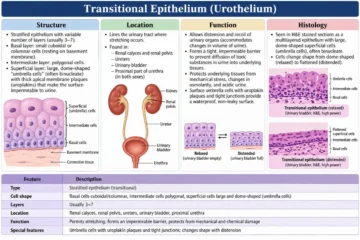
Transitional Epithelium

Transitional Epithelium: Structure, Location, Function, and Histology

Transitional epithelium, also called urothelium, is a specialized type of stratified epithelial tissue that lines parts of the urinary tract, including the renal calyces, renal pelvis, ureters, and urinary bladder. Its two main functions are allowing urinary organs to stretch as they fill with urine and protecting the underlying tissues from substances in urine. Unlike most epithelial tissues, its superficial cells can change shape as these organs expand and contract. Large, rounded cells called umbrella Read more

Ronnie Coleman Now

Ronnie Coleman Now: 2026 Health Update, Mobility, and Life Today

Ronnie Coleman now lives with significant mobility challenges but remains active in the fitness community. As of October 2026, the eight-time Mr. Olympia champion is 62 years old. He survived a life-threatening episode of sepsis in 2025 and later returned to modified gym training. Coleman has used a wheelchair and undergone multiple spinal and hip surgeries. Although he remains hopeful about walking independently again, his exact medical condition and mobility in October 2026 have not Read more

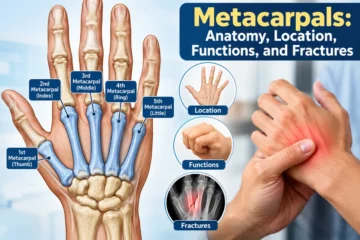
Metacarpals

Metacarpals: Anatomy, Location, Functions, and Fractures

The metacarpals are five long bones that form the framework of the palm of each hand. Located between the wrist and fingers, these bones are numbered I through V, starting at the thumb and ending at the little finger. They support the palm, connect the wrist to the fingers, and help with everyday movements such as gripping, grasping, and holding objects. Each hand contains eight carpal bones in the wrist, five metacarpal bones in the Read more

Parietal Bone

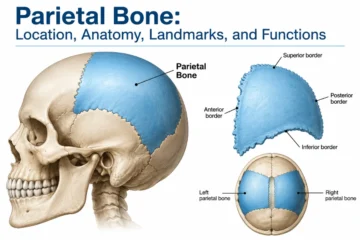
Parietal Bone: Location, Anatomy, Landmarks, and Functions

The parietal bone is one of two paired, curved flat bones that form much of the upper and lateral portions of the human skull. Located on either side of the head, these bones make up a large part of the cranial vault, the bony structure that surrounds and protects the brain. They also help maintain the skull’s shape and provide attachment areas for muscles and fascia. The right and left parietal bones meet along the Read more

Temporal Bone

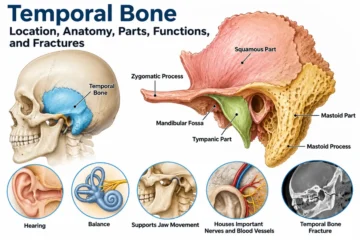
Temporal Bone: Location, Anatomy, Parts, Functions, and Fractures

The temporal bone is one of two paired bones located on the sides and base of the human skull, near the ears. Each temporal bone forms part of the cranial base, protects structures involved in hearing and balance, supports jaw movement, and provides pathways for important nerves and blood vessels. Its four major anatomical portions are the squamous, petrous, mastoid, and tympanic parts. Understanding temporal bone anatomy helps explain how the skull protects the delicate Read more

Arm Bones

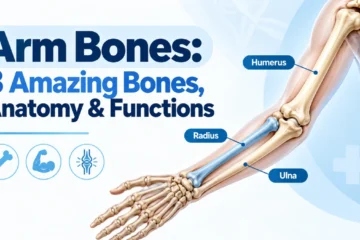
Arm Bones: Anatomy, Names, Locations, and Functions

The three main arm bones are the humerus, radius, and ulna. The humerus runs from the shoulder to the elbow, forming the upper arm. The radius and ulna extend from the elbow to the wrist, forming the forearm. Together, these bones provide support, connect the major joints of the arm, and make movements such as bending, straightening, and turning the forearm possible. In medical anatomy, the term arm refers specifically to the area between the Read more

Knee Anatomy

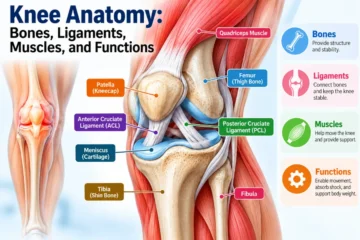
Knee Anatomy: Bones, Ligaments, Muscles, and Functions

The knee is a modified hinge-type synovial joint that connects the thigh to the lower leg. It consists of three principal bones: the femur (thighbone), tibia (shinbone), and patella (kneecap). The nearby fibula provides attachment points for supporting tissues but is not part of the knee’s main articulations. These are the tibiofemoral joint, where the femur meets the tibia, and the patellofemoral joint, where the patella meets the femur. This arrangement allows the knee to Read more

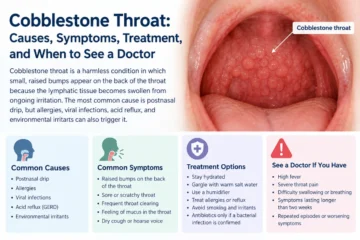
Cobblestone Throat

Cobblestone Throat: Causes, Symptoms, Treatment, and When to See a Doctor

Cobblestone Throat is a harmless but often uncomfortable condition in which small, raised bumps appear on the back of the throat because the lymphatic tissue becomes swollen from ongoing irritation. The most common cause is postnasal drip, but allergies, viral infections, acid reflux, and environmental irritants can also trigger it. The bumps themselves are not contagious and usually improve once the underlying cause is treated. Although the appearance can be concerning, Cobblestone Throat is a Read more

Itchy Throat

Itchy Throat: Why It Happens and How to Find Relief 

An itchy throat is a scratchy, tickling, or irritating sensation that often makes you want to cough or clear your throat. Common causes include allergies, postnasal drip, viral infections, dry air, dehydration, and acid reflux. Drinking water, using honey, and keeping the air comfortably humid may provide relief. However, the most effective treatment depends on what is causing the irritation. Most cases are mild and improve with simple home care. Pay attention to symptoms such Read more

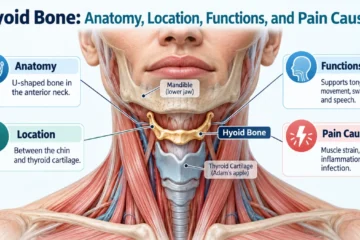
Hyoid bone anatomy showing its location in the human neck

Hyoid Bone: Anatomy Location Functions and Pain Causes

The hyoid bone is a small u-shaped bone that can be found in your neck. This bone provides several functions including: assisting you to swallow, speak, and breathe. Most of the bones in the human body are connected to other bones; however, the hyoid bone does not connect to any other bones. Muscles and ligaments assist with supporting this bone. I’m pretty sure you never think about what this bone has to do with being Read more