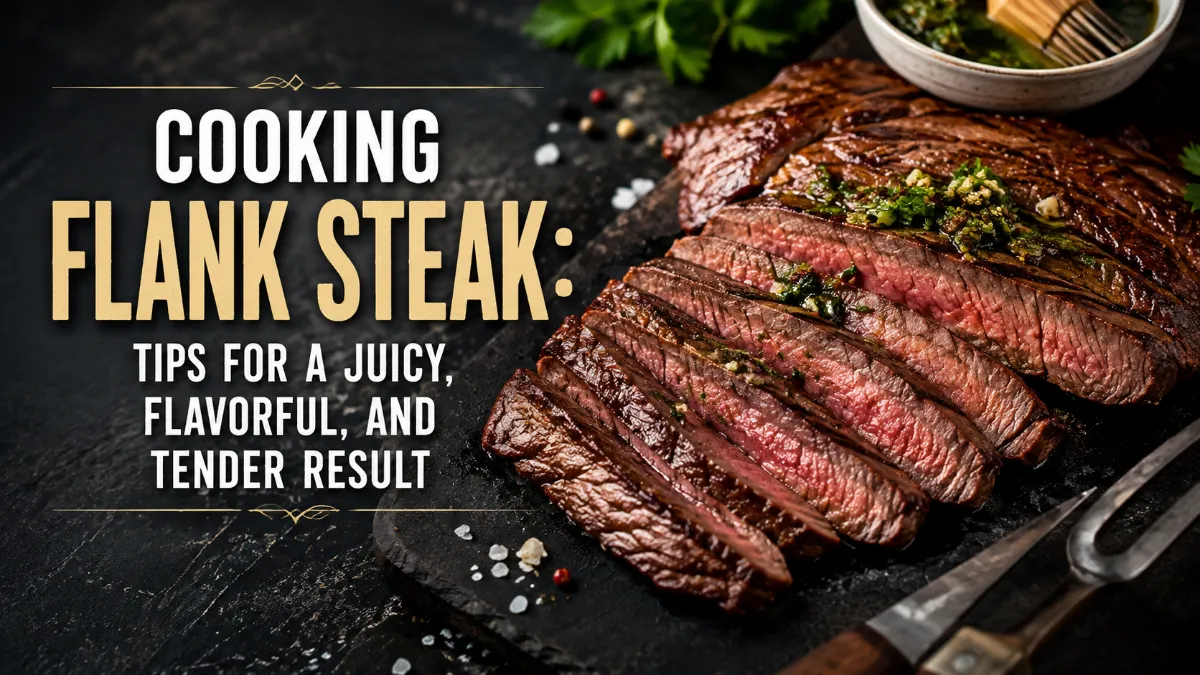
Flank steak is a lean, deeply beefy cut that becomes tender when cooked quickly over high heat, rested, and sliced thinly against the grain. It is ideal for grilling, broiling, and pan-searing, then serving in fajitas, salads, sandwiches, tacos, and grain bowls.
What Is Flank Steak?
Flank steak is a long, flat cut from the cow’s abdominal area. It has a pronounced grain—the visible, parallel muscle fibers running through the meat—and less marbling than ribeye or strip steak.
That structure is why technique matters. Fast cooking develops a browned crust before the interior overcooks, while thin slices cut across the grain shorten the fibers and make each bite easier to chew. A marinade adds flavor and can improve the surface texture, but it cannot compensate for overcooking or carving in the wrong direction.
Flank Steak at a Glance
| Characteristic | What it means in the kitchen |
| Lean and flavorful | Cook quickly and avoid overcooking |
| Thin and wide | Cooks fast and serves several people |
| Long, visible grain | Slice thinly across the grain |
| Moderate chew | Rest the meat and carve it correctly |
| Versatile shape | Well suited to fajitas, salads, bowls, and sandwiches |
Read more: Cooking Flank Steak
How to Prepare Flank Steak
Flank steak can be seasoned simply or marinated before cooking. Either approach works; choose a marinade when you want more pronounced flavor or plan to use the meat in tacos, rice bowls, or fajitas.
Simple seasoning
For a 1½- to 2-pound steak, season with:
- 1½ teaspoons kosher salt
- 1 teaspoon freshly ground black pepper
- 1 tablespoon neutral high-heat oil, for pan-searing
- Optional: garlic powder, smoked paprika, cumin, or crushed red pepper
Salt the meat shortly before cooking, or several hours ahead for deeper seasoning. Before cooking, pat the surface dry thoroughly; excess moisture prevents browning.
Flank steak marinade
This versatile marinade suits grilling, broiling, or pan-searing:
- ¼ cup soy sauce or tamari
- 2 tablespoons olive oil
- 2 tablespoons lime juice or red-wine vinegar
- 1 tablespoon brown sugar or honey
- 2 cloves garlic, finely grated or minced
- 1 teaspoon ground cumin
- ½ teaspoon black pepper
Whisk the ingredients and marinate the steak in the refrigerator for 30 minutes to 4 hours. Turn it once if it is not fully submerged.
Before cooking, remove the meat from the marinade, wipe away excess liquid and garlic, and pat it dry. Do not use raw marinade as a finishing sauce unless it is boiled first.
How to Cook Flank Steak
The best way to cook flank steak is over intense, direct heat. Grilling, broiling, and pan-searing all produce a well-browned exterior while keeping the center from becoming dry and firm.
Grilled flank steak
- Preheat a clean, lightly oiled grill for direct high heat, about 450–500°F.
- Pat the seasoned or marinated steak dry.
- Grill for 4–6 minutes on the first side.
- Turn once and cook for another 3–5 minutes, depending on thickness and desired doneness.
- Transfer to a cutting board and rest for 5–10 minutes.
- Slice thinly across the grain.
Keep the lid closed between turns when practical. If a sweet marinade causes flare-ups, move the steak briefly to a cooler area rather than repeatedly turning it.
Pan-seared flank steak
A heavy cast-iron skillet is an effective indoor option.
- Heat a dry skillet over medium-high to high heat until very hot.
- Lightly oil the steak or add a small amount of high-smoke-point oil to the pan.
- Sear without moving the steak for 3–5 minutes.
- Turn and cook for another 3–5 minutes.
- Check the thickest part with an instant-read thermometer.
- Rest before slicing.
For a better crust, avoid crowding the pan and do not add a wet steak. Add butter only near the end of cooking, after the initial sear, to reduce scorching.
Broiled flank steak
Broiling is the closest oven-based alternative to grilling.
- Position an oven rack 4–6 inches below the broiler.
- Preheat the broiler and a broiler-safe pan.
- Place the steak on the hot pan or rack.
- Broil for about 4–6 minutes per side, checking early because broilers vary.
- Rest before carving.
Watch carefully, especially if the marinade contains sugar. The top heat is intense and can burn the surface quickly.
Flank Steak Cooking Temperatures
Use an instant-read thermometer rather than relying only on cooking time. Insert the probe into the thickest section of the meat, ideally from the side, so its tip reaches the center.
| Doneness | Pull temperature | Result after resting |
| Rare | 120–125°F | Deep red center and very soft texture |
| Medium-rare | 125–130°F | Warm red-pink center and a tender texture |
| Medium | 135–140°F | Pink center and a firmer bite |
| Medium-well to well-done | 145°F+ | Little to no pink; likely chewy for this cut |
For food safety, whole cuts of beef should reach 145°F and rest for at least three minutes before carving or eating. Many cooks choose medium-rare for flank steak’s texture, but the appropriate doneness depends on individual preference and food-safety needs.fsis.usda+1
Why Resting Matters
Resting lets the temperature settle and reduces the amount of juice lost when the steak is sliced. Five to 10 minutes is usually sufficient for this cut.
Tent the meat loosely with foil only if needed to keep it warm. Tight wrapping traps steam and can soften the browned exterior.
How to Slice Flank Steak Against the Grain
Slicing is the step that most affects tenderness. Look for the long, parallel muscle fibers running across the cooked steak. Cut perpendicular to those fibers—not alongside them.
For a wide piece of meat, first divide it into two or three shorter sections along the grain. Rotate each piece 90 degrees, then carve thin diagonal slices across the grain. Holding a sharp knife at a slight angle produces wider slices while still shortening the muscle fibers.
Flank Steak vs. Skirt Steak
Flank steak and skirt steak perform similarly in many recipes, but they differ in shape, texture, and cooking speed.
| Feature | Flank steak | Skirt steak |
| Shape | Broad, flat, and relatively uniform | Narrower, thinner, and often irregular |
| Texture | Lean with long, firm fibers | Looser texture with a more pronounced grain |
| Flavor | Beefy and clean | Rich and intensely beef-forward |
| Best uses | Salads, bowls, sliced steak, and London broil-style preparations | Fajitas, tacos, and rapid high-heat cooking |
| Cooking approach | High heat; avoid cooking past medium | Very high heat; cooks especially quickly |
Both cuts benefit from high heat, resting, and thin slicing across the grain. When substituting skirt steak, shorten the cooking time because it is usually thinner.
Three Flank Steak Recipe Variations
Chimichurri grilled steak
Season the steak with salt, pepper, garlic, and oil, then grill it quickly over direct heat. Serve the sliced meat with chimichurri for a bright contrast of parsley, garlic, oil, and vinegar.
Fajita-style steak
Marinate the meat with lime, garlic, cumin, chili powder, and oil. Grill or sear it, then serve with charred onions, peppers, tortillas, salsa, avocado, and lime.
Asian-inspired steak bowls
Use a soy, ginger, garlic, sesame oil, and honey marinade. Cook the steak quickly, slice it thinly, and serve over rice with cucumbers, scallions, herbs, and crisp vegetables.
Common Mistakes to Avoid
- Overcooking a lean cut until it becomes dry and firm
- Adding a wet steak to the grill or skillet
- Cooking over insufficient heat and missing the browned crust
- Cutting immediately instead of resting first
- Slicing with the grain rather than across it
- Trusting timing alone instead of checking temperature
- Using raw marinade as a sauce