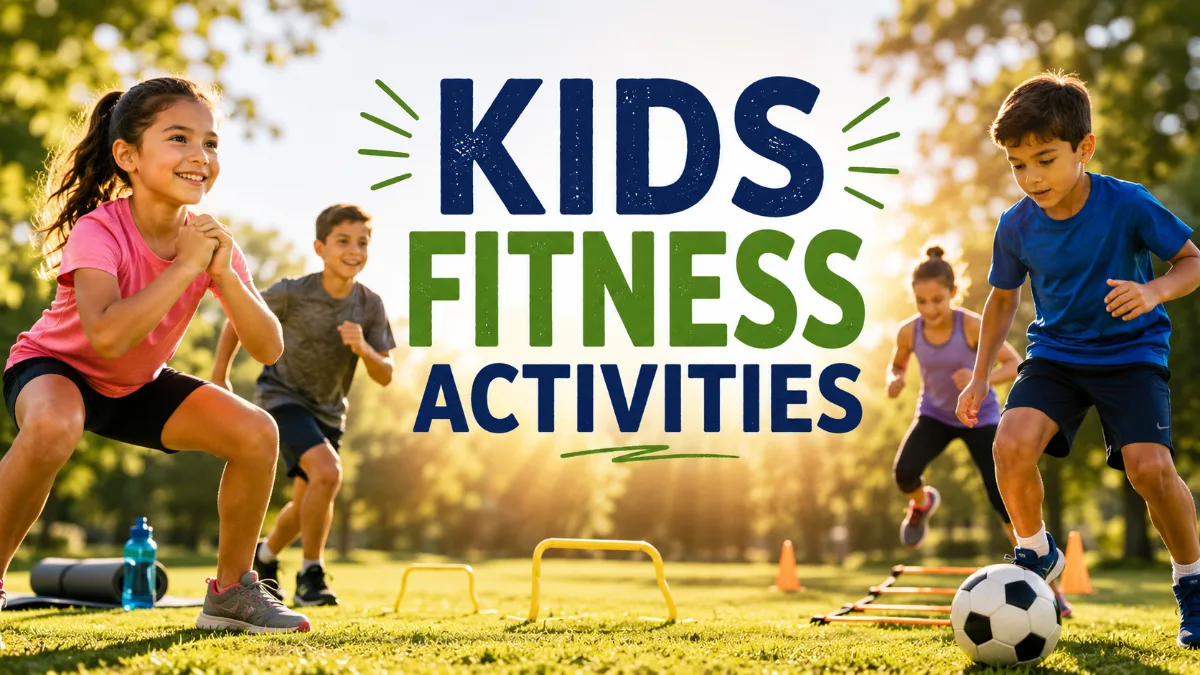
Kids fitness activities are enjoyable forms of movement that help children develop strength, stamina, balance, coordination, confidence, and everyday motor skills. The best approach is not a strict exercise programme. It is regular, varied, age-appropriate play that children enjoy and can do safely.
Children ages 3–5 should be active throughout the day. Children and adolescents ages 6–17 should aim for at least 60 minutes of moderate-to-vigorous physical activity every day, including activities that strengthen muscles and bones on at least three days each week. The activity can be spread across the day through play, walking, school breaks, sports, and family time.
This guide shares practical physical activities for kids by age, setting, skill level, and developmental benefit, with a focus on safety, enjoyment, and realistic implementation.
Why Movement Matters for Children
Regular movement supports physical health, learning, emotional wellbeing, and social development. When children run, jump, climb, throw, catch, cycle, dance, or play games, they practise skills that are useful in school, sports, friendships, and daily life.
Active play can help children develop:
- Heart and lung fitness through walking, running, cycling, swimming, dancing, and active games
- Muscle strength through climbing, crawling, monkey bars, bodyweight movements, and playground play
- Bone strength through jumping, hopping, skipping, running, and impact-based play
- Balance, coordination, and body awareness through yoga, dance, obstacle courses, and ball games
- Fundamental movement skills such as locomotion, throwing, catching, kicking, jumping, and landing
- Confidence through learning new skills and overcoming manageable challenges
- Social abilities such as cooperation, turn-taking, communication, and fair play
- Long-term habits that make daily movement feel normal and enjoyable
Children do not need to be highly athletic, competitive, or enrolled in organised sport to be active. A simple game of tag, a family walk, a dance break, or a climbing session at the playground can all contribute to a more active day.
- Read more: Kids Fitness Activities
How Much Physical Activity Do Kids Need?
Children need regular movement that fits their age, health, developmental stage, and interests. The most practical goal is to make activity a natural part of daily life rather than treating it as one formal workout.
| Age group | General activity goal | What it may include |
| Ages 3–5 | Be active throughout the day | Active play, climbing, dancing, walking, tricycle riding, chasing games |
| Ages 6–17 | At least 60 minutes of moderate-to-vigorous activity daily | Brisk walking, active play, cycling, sports, running games, swimming, dance |
| Ages 6–17, at least 3 days weekly | Include vigorous, muscle-strengthening, and bone-strengthening movement | Fast running, jumping, skipping, climbing, bodyweight exercises, playground games |
For school-aged children and teens, most daily activity should be aerobic. Activities that noticeably raise breathing and heart rate—such as fast dance, running games, cycling, swimming, or sport—can count as vigorous activity. Running, hopping, skipping, and jumping support bone-strengthening movement, while climbing, crawling, monkey bars, and bodyweight exercises can help develop muscular strength.
The 60-minute goal does not have to happen all at once. A walk to school, active recess, a 15-minute game after school, and a family activity in the evening can add up across the day.
Age-Appropriate Kids Fitness Activities
Age-appropriate fitness activities for children should build current abilities without expecting adult-level attention, technique, endurance, or competitiveness. Children develop at different rates, so use age ranges as a guide while adjusting activities to each child’s confidence and skills.
Toddlers and Preschoolers: Ages 3–5
For young children, movement should feel like play. Short, frequent bursts of activity are usually more effective than a structured exercise session. Focus on exploration, simple directions, safe spaces, and imaginative games rather than rules, scores, or performance.
Good activities for ages 3–5
- Animal walks, including bear crawls, bunny hops, crab walks, and penguin waddles
- Dance and freeze games
- Follow-the-leader movement games
- Soft-ball rolling, tossing, and kicking
- Bubble chasing
- Playground climbing and sliding with adult supervision
- Simple obstacle courses using cushions, tape lines, cones, or pillows
- Tricycle or balance-bike riding in a safe area
- Music-and-movement games
- Marching, hopping, tiptoeing, and jumping over low markers
- Water play and supervised swimming
- Family walks with a simple scavenger-hunt theme
At this stage, children are learning to run, stop, turn, balance, jump, and control objects. Change activities often. Five to 10 minutes of one game may be plenty before switching to something new.
Developmental benefits for preschoolers
| Activity | Skills supported |
| Animal walks | Core strength, coordination, imagination |
| Dancing | Rhythm, balance, body awareness |
| Ball rolling and kicking | Tracking, coordination, timing |
| Obstacle courses | Balance, planning movement, confidence |
| Playground play | Grip strength, climbing, spatial awareness |
| Tricycle riding | Leg strength, steering, coordination |
Avoid pushing preschoolers into formal training routines. The aim is to help them associate movement with fun, curiosity, and a sense of achievement.
Early School Age: Ages 6–8
Children in this age group can follow more detailed game instructions, practise basic skills, and enjoy simple goals. They still benefit most from playful variety, but they may be ready for beginner sports, short routines, and cooperative challenges.
Good activities for ages 6–8
- Tag, relay races, and capture-the-flag variations
- Skipping and jump-rope games
- Beginner cycling
- Swimming lessons and recreational swimming
- Playground circuits
- Beginner martial arts, gymnastics, dance, or yoga
- Throwing and catching games with different ball sizes
- Mini football, cricket, basketball, badminton, or racquet games with simplified rules
- Nature walks, treasure hunts, and park games
- Balloon volleyball indoors
- Hula-hoop challenges
- Low-impact bodyweight games, including wall push-ups, bear crawls, step-ups, and squats to a chair
Use smaller teams, lighter equipment, shorter rounds, and flexible rules. Instead of a full cricket match, children can enjoy target throwing, a short batting rotation, catching practice, or a cone-running game.
Developmental benefits for ages 6–8
This is a useful period for improving:
- Fundamental movement patterns
- Hand-eye and foot-eye coordination
- Agility and safe changes of direction
- Social skills, including turn-taking and teamwork
- Confidence when trying new activities
- Understanding of simple rules and fair play
Older Children: Ages 9–12
Children ages 9–12 may be ready for longer games, structured skill development, and more independent activity choices. Enjoyment still matters more than performance. If a child dislikes one activity, offer alternatives rather than treating one sport as the only route to fitness.
Good activities for ages 9–12
- Cycling, skating, or scooter riding with appropriate protective equipment
- Team sports such as football, cricket, basketball, volleyball, hockey, or kabaddi
- Swimming, martial arts, tennis, badminton, or athletics
- Dance styles such as hip-hop, contemporary, folk, or fitness dance
- Hiking, walking challenges, and family outdoor activities
- Jump-rope routines and skipping challenges
- Playground or park fitness circuits
- Beginner strength exercises using body weight
- Non-competitive races, fun runs, or family step challenges
- Yoga or mobility routines
- Orienteering, active scavenger hunts, and nature challenges
- Beginner climbing with qualified supervision
At this age, children can learn basic movement technique, such as safe landing, squatting, throwing, changing direction, and braking on a bicycle. Teach these skills calmly and avoid excessive pressure to improve quickly.
A simple beginner movement circuit
Try this 15- to 20-minute circuit two or three times a week:
- March, skip, or jog in place for 60 seconds.
- Complete 8–10 bodyweight squats to a chair or bench.
- Do 10 jumping jacks or step jacks.
- Bear crawl across a room, garden, or lawn and back.
- Complete 8–10 wall push-ups.
- Balance on one foot for 15–20 seconds per side.
- Throw and catch a ball for two minutes.
- Rest briefly, then repeat once if the child is comfortable and interested.
Adjust the repetitions, speed, and rest periods to suit the child. Safe technique, comfortable effort, and enjoyment are more important than completing a fixed number of repetitions.
Teens: Ages 13–17
Teenagers can take more ownership of their movement choices. Some enjoy organised sport, while others prefer individual exercise, outdoor recreation, dance, active commuting, or social activities with friends. The most sustainable option is usually the one that fits their interests, confidence, access, and schedule.
Good activities for teens
- Team sports and school sports
- Bodyweight and resistance-band strength training with qualified guidance
- Running, jogging, cycling, swimming, or rowing
- Dance, yoga, Pilates, or martial arts
- Hiking, trekking, climbing, and other outdoor recreation
- Youth-appropriate fitness classes or home workouts
- Basketball, football, cricket, racquet sports, or volleyball
- Walking or cycling for short trips where it is safe
- Recreational skating or skateboarding with protective equipment
- Park games, group walks, and non-competitive fitness challenges
Teen strength work does not need to involve heavy lifting. Bodyweight exercises, resistance bands, controlled technique, and appropriate supervision can provide a strong foundation. Children and teens should stop activity if they experience sharp pain, dizziness, fainting, chest pain, or unusual breathing difficulty.
Indoor Fitness Activities for Kids
Indoor fitness activities for kids are useful during rain, very hot weather, poor air quality, limited outdoor access, or busy family schedules. Many options require little equipment and can be adapted for classrooms, apartments, living rooms, or community spaces.
Low-space indoor activity ideas
- Dance party with song-length movement breaks
- Freeze dance
- Balloon tennis using hands, paper plates, or lightweight paddles
- Sock-ball target throws into laundry baskets
- Painter’s-tape balance lines
- Hallway bowling using lightweight plastic bottles
- Simon Says with movement commands
- Indoor scavenger hunts with active tasks
- Yoga poses based on animals or stories
- Pillow or cushion obstacle courses
- Card-based movement games
- Safe stair walking with supervision
- Shadow boxing without contact
- Age-appropriate follow-along dance or movement sessions
Indoor obstacle course example
A home obstacle course can make movement feel like a game while developing balance, coordination, and confidence.
- Walk heel-to-toe along a tape line.
- Crawl under a table or through a blanket tunnel.
- Toss three rolled socks into a basket.
- Step or jump over a rolled towel.
- Balance on one foot beside a stable chair.
- Dance for 30 seconds at the finish line.
Keep walkways clear, remove slipping hazards, avoid sharp-edged furniture, and do not place jumping activities near stairs, hard surfaces, or fragile objects.
Outdoor Fitness Activities for Children
Outdoor fitness activities for children give them more room for larger movements, exploration, social play, and fresh-air routines. Parks, playgrounds, school grounds, gardens, open fields, and safe walking routes can all support active play.
Outdoor activity ideas by interest
| Child’s interest | Outdoor activity | Main benefits |
| Loves games | Tag, relay races, capture the flag | Aerobic fitness, agility, social play |
| Likes ball games | Football, cricket, catch, basketball | Coordination, movement skills, teamwork |
| Enjoys nature | Hiking, scavenger hunts, gardening | Walking endurance, curiosity, confidence |
| Prefers solo activity | Cycling, skipping, scooter riding | Independence, stamina, coordination |
| Likes challenges | Playground circuit, climbing, obstacle course | Strength, balance, problem-solving |
| Enjoys music | Dance in the park, movement games | Aerobic movement, rhythm, self-expression |
| Wants social activity | Group sport, park games, family walks | Connection, routine, motivation |
Outdoor games that build fitness naturally
- Traffic-light game: One person calls green for run, yellow for walk, and red for freeze.
- Cone treasure hunt: Children run, hop, skip, or walk quickly to collect objects from marked points.
- Playground circuit: Climb, balance, hang, walk or run to a marker, then repeat.
- Target challenge: Throw beanbags, soft balls, or rolled socks into hoops, chalk circles, or buckets from different distances.
- Jump-and-count: Set a timer and count skips, hops, or jumps, with rest breaks as needed.
- Family walk bingo: Look for items such as a bird, red door, bicycle, or round leaf while walking.
- Sports sampler: Spend 10 minutes each on kicking, throwing, catching, bouncing, and running rather than playing one formal sport.
Outdoor activity needs sensible planning. Consider heat, weather, air quality, traffic, water hazards, surface safety, shade, and sun protection. In hot conditions, choose cooler times of day, offer regular water breaks, use shade when possible, and lower intensity if a child appears overheated or unwell.
Match Activities to Skill Level
The right level of challenge keeps activity enjoyable. An activity that is too easy can become boring, while one that is too difficult may lead to frustration, anxiety, or avoidance.
Beginner activities
Beginner-friendly physical activities for kids should be simple, low-pressure, and easy to adapt.
- Walking games
- Dance and movement imitation
- Rolling and kicking a large soft ball
- Basic playground play
- Balance games
- Short scavenger hunts
- Simple stretches and yoga poses
- Tricycle riding or beginner cycling
- Light target throwing
- Animal walks and crawling games
Use large, soft equipment and reduce distance, speed, height, or rule complexity. Give children plenty of time to practise before adding a new challenge.
Intermediate activities
Intermediate activities add skill combinations, endurance, strategy, or friendly competition.
- Jump-rope patterns
- Catching and throwing while moving
- Obstacle courses with simple time goals
- Cycling longer distances
- Beginner sport drills
- Swimming games and laps
- Dance routines
- Modified team games
- Bodyweight movement circuits
- Hiking on suitable routes
Advanced activities
Advanced does not mean adult-level intensity. It means the child has experience, sound movement skills, and a genuine interest in progressing.
- Sport-specific skill development with qualified coaching
- Longer hikes or cycling routes
- Age-appropriate running plans
- More complex dance or martial arts sequences
- Supervised climbing
- Strength training focused on technique
- Competitive sport in a supportive environment
Progress one element at a time: duration, distance, movement complexity, speed, or resistance. Avoid increasing all of them at once.
Developmental Benefits of Different Activity Types
A varied week of movement is more useful than repeating the same workout. Different activities build different physical, social, and movement skills.
| Activity type | Examples | Main developmental benefits |
| Aerobic activity | Running games, cycling, swimming, dance | Heart and lung fitness, stamina |
| Muscle-strengthening play | Climbing, crawling, monkey bars, wall push-ups | Strength, posture, movement control |
| Bone-strengthening movement | Jumping, hopping, skipping, running | Bone loading, safe landing skills |
| Balance and mobility | Yoga, balance lines, skating basics | Stability, body awareness, flexibility |
| Object-control skills | Catching, throwing, kicking, striking | Coordination, timing, sport readiness |
| Cooperative games | Relays, team sports, partner challenges | Communication, teamwork, fair play |
| Outdoor exploration | Walking, hiking, park play | Endurance, confidence, curiosity |
Running, jumping, climbing, and playground games often provide more than one benefit at the same time. A game that combines chasing, jumping, and throwing can support aerobic fitness, muscle use, bone-strengthening movement, coordination, and social interaction in one activity.
Make Fitness Fun Enough to Last
Fun fitness activities for kids are more likely to become regular habits. Motivation often improves when children feel capable, have some choice, and are not judged for their speed, body shape, or sporting ability.
Practical ways to keep children engaged
- Offer two or three activity choices instead of giving one command.
- Use games, music, stories, themes, and friendly challenges.
- Let children help make the rules or design an obstacle course.
- Praise effort, learning, teamwork, and persistence.
- Invite friends or family members when social support helps.
- Keep simple equipment accessible, such as balls, chalk, cones, balloons, or skipping ropes.
- Change activities before boredom takes over.
- Avoid using exercise as punishment.
- Avoid comparing siblings, classmates, or teammates.
- Respect a child’s preference for non-competitive movement.
When a child says, “I hate exercise,” they may actually dislike a particular sport, social setting, skill level, instructor, or amount of competition. Try a different activity format before assuming they dislike movement altogether.
Build a Realistic Weekly Activity Routine
A practical routine should fit school timing, family life, weather, available space, and the child’s preferences. It does not need to be identical every day.
Example weekly activity plan for a school-aged child
| Day | Main activity | Approximate focus |
| Monday | Walk, cycle, or active commute plus playground time | Aerobic movement |
| Tuesday | Dance game and bodyweight play circuit | Aerobic and muscle-strengthening movement |
| Wednesday | Ball game or team-sport practice | Coordination and aerobic movement |
| Thursday | Indoor obstacle course or jump-rope game | Bone-strengthening movement and agility |
| Friday | Family walk, park play, or swimming | Aerobic movement |
| Saturday | Longer outdoor activity, sport, or cycling | Stamina and enjoyment |
| Sunday | Yoga, active chores, relaxed play, or a nature walk | Recovery and routine |
The daily activity goal can be built through several short periods of movement rather than one formal workout. Variety, consistency, and enjoyment matter more than a perfect schedule.
Safety Rules for Kids Fitness Activities
Most children can participate safely in active play when activities match their abilities and the environment is prepared properly. Basic safety habits reduce preventable injuries and help children feel confident while moving.
Use these safety checks
- Choose activities suited to the child’s age, ability, confidence, and health needs.
- Check spaces for traffic, broken equipment, standing water, uneven ground, sharp objects, and other hazards.
- Use helmets and appropriate protective equipment for cycling, skating, and similar activities.
- Provide water, weather-appropriate clothing, and rest breaks.
- Use footwear that fits the activity and surface.
- Teach safe landing, stopping, spacing, and sharing before introducing speed or competition.
- Supervise water activities closely at all times.
- Avoid outdoor exercise during dangerous weather, unsafe air conditions, or extreme heat.
- Stop activity if the child experiences chest pain, faints, feels dizzy, develops unusual breathing difficulty, or has sharp or worsening pain.
- Seek advice from a qualified health professional before starting a new programme if a child has a medical condition, recent injury, or specific movement restriction.
Children with disabilities or chronic health conditions can often participate in adapted physical activity. The most useful approach is to ask what changes in equipment, pacing, communication, rules, or environment will help the child participate safely and meaningfully.
Common Mistakes to Avoid
Making activity feel like a test
Children are more likely to remain active when they feel successful. Avoid turning play into a performance review, especially for beginners or children with lower confidence.
Specialising too early
A child may enjoy one sport, but broad movement experiences are valuable. Running, jumping, throwing, balancing, swimming, dancing, climbing, and cycling can create a more complete movement foundation.
Using adult exercise standards
Children are not small adults. They need shorter instructions, frequent variety, adequate recovery, and developmentally appropriate equipment. Their activity should support healthy development and enjoyment rather than copy an adult gym programme.
Ignoring recovery or discomfort
Normal tiredness after a busy day differs from persistent pain, limping, repeated complaints, or a noticeable change in mood around activity. Take these signs seriously and avoid encouraging children to push through an injury.
Depending only on organised sport
Classes and teams can be valuable, but informal active play matters too. Families can create meaningful movement opportunities without expensive equipment, memberships, or formal coaching.
A Simple Starting Checklist
Use this checklist to add more movement to a child’s week:
- Choose one indoor option for bad-weather days.
- Choose one outdoor activity the child already enjoys.
- Add one short active break after school or between study periods.
- Keep a ball, skipping rope, chalk, or similar simple equipment easy to reach.
- Plan active family time once or twice this week.
- Let the child choose at least one activity.
- Include movement that involves running, jumping, climbing, dancing, or active play.
- Adjust for weather, available space, and equipment safety.
- Focus on consistency rather than perfection.
- Notice what the child enjoys and repeat or build on it.
The best activities are not always the most structured or intense. They are the ones that make movement a regular, safe, positive part of childhood.
Frequently Asked Questions
What are the best fitness activities for kids who do not like sports?
Children who do not enjoy organised sport may prefer dance, cycling, swimming, martial arts, hiking, playground games, skating, yoga, active video games, or family walks. Ask what they dislike about sports first. It may be competition, noise, team pressure, complicated rules, fear of mistakes, or an unpleasant past experience. Then choose an activity that removes that barrier. A child who dislikes football may enjoy cycling independently, learning dance routines, completing a nature scavenger hunt, or climbing at a suitable facility.
How can indoor fitness activities for kids work in a small home?
Small spaces can still support effective active play. Try freeze dance, balloon volleyball, sock-ball target throws, wall push-ups, animal walks, yoga, tape balance lines, and movement-based scavenger hunts. Clear the activity area first, move fragile items away, and avoid fast running or high jumping around furniture. Short five- to 10-minute movement breaks often work better than trying to create a long indoor workout. Rotate activities regularly so children stay interested without needing new equipment.
Is strength training safe for children?
Age-appropriate strength activities can be safe when they use controlled movements, correct technique, suitable resistance, and adult or qualified supervision. Children can build strength through climbing, crawling, playground play, squats, wall push-ups, resistance bands, and supervised instruction. The priority should be learning movement skills, not lifting maximum weight or training through discomfort. Children with a medical condition, recent injury, persistent pain, or uncertainty about a programme should receive guidance from a qualified health professional before beginning new strength exercises.How much exercise should a 5-year-old get each day?
How much exercise should a 5-year-old get each day?
Children ages 3–5 should be active throughout the day through varied play and movement. This can include dancing, climbing, walking, riding a tricycle, chasing bubbles, playground time, simple ball games, and imaginative movement play. Short, frequent active periods usually suit young children better than one planned exercise session. Focus on opportunities for active play rather than counting every minute. For children ages 6–17, the general daily target is at least 60 minutes of moderate-to-vigorous physical activity.
What are safe outdoor fitness activities for children in hot weather?
Choose cooler times of day, seek shaded routes or play areas, provide regular water breaks, and reduce activity intensity during high heat. A relaxed family walk, supervised water play, shaded playground activity, gentle cycling, or an indoor movement session may be more suitable than prolonged intense exercise. Dress children in lightweight, weather-appropriate clothing and stop activity if they appear dizzy, weak, confused, unusually tired, or unwell. Check local weather and air-quality conditions before planning long periods outdoors.
How can schools add physical activity without reducing learning time?
Schools can include brief movement breaks between lessons, active classroom games, walking discussions, active recess, physical education, before-school clubs, and safe active-travel opportunities. Short movement breaks can help interrupt long periods of sitting and give students a chance to reset. The most realistic approach is to include movement within the school day rather than treating it as separate from learning. Activities should be inclusive, simple to explain, and adaptable for different ages, abilities, and classroom spaces.
Which activities improve balance and coordination in children?
Dance, yoga, balance lines, hopping games, obstacle courses, playground climbing, skipping, catching, throwing, kicking, skating basics, and beginner martial arts can all improve balance and coordination. Start with an easy version and change one challenge at a time. For example, a child may first balance near a stable chair, then walk along a line on the floor, then complete a short balance sequence. Improving balance is usually about regular practice, not forcing difficult exercises too soon.
Can active video games count as physical activity for kids?
Some active video games can contribute to movement when they require sustained whole-body activity, such as dancing, sports simulations, boxing-style movement without contact, or exercise games. They are best treated as one option among many rather than a replacement for outdoor play, free movement, sports, or social activity. Choose content appropriate for the child’s age, keep the playing area clear, and encourage breaks. The important question is whether the child is moving meaningfully and enjoying the activity safely.
What should I do if my child gets bored with exercise quickly?
Boredom may mean an activity is too repetitive, too difficult, too easy, or disconnected from the child’s interests. Use shorter sessions, offer choices, add music or a theme, invite a friend, change the setting, and turn drills into games. Instead of running laps, try a treasure hunt, relay, obstacle course, or nature challenge. Avoid forcing participation or making exercise a punishment. Notice which movements the child naturally chooses, such as dancing, climbing, kicking, cycling, or throwing, and use those interests as the starting point.
How can I encourage a child with low confidence to be more active?
Start with low-pressure activities where success is likely, such as walking, private dancing at home, balloon games, simple target throws, or casual playground play. Avoid comparisons, public pressure, and highly competitive settings at first. Praise effort, willingness to try, and small progress rather than speed, appearance, or winning. Give children choices and let them practise skills in a supportive environment before joining a group. Confidence tends to grow when children feel capable, in control, and able to enjoy movement at their own pace.