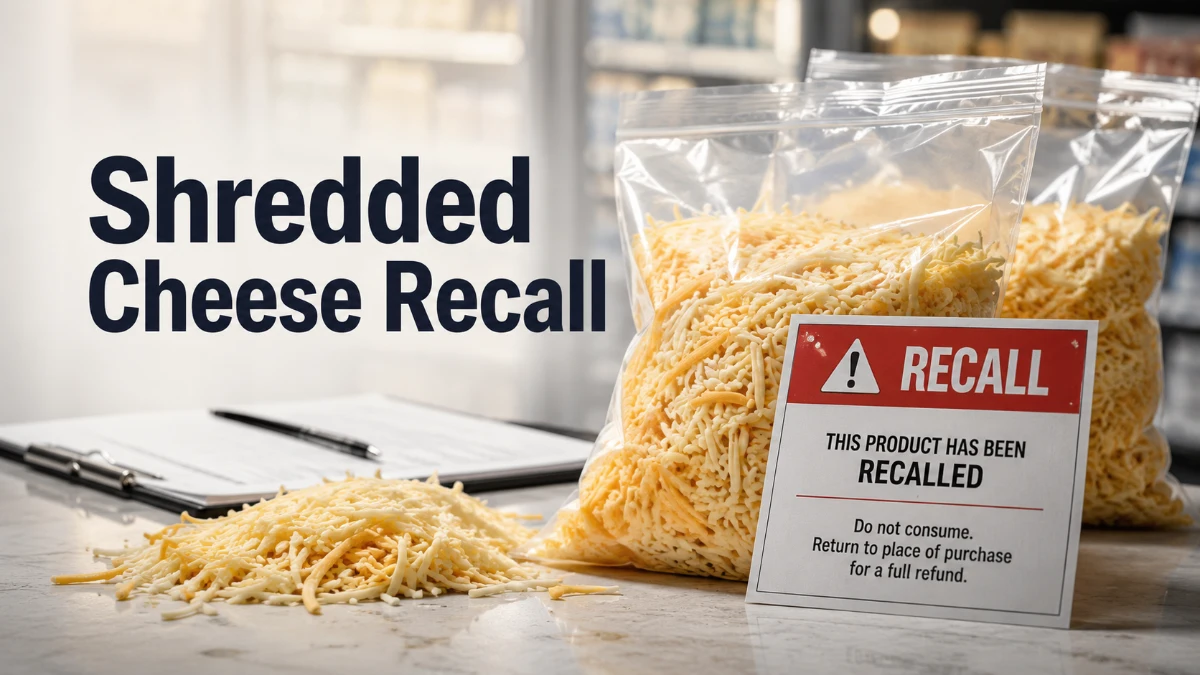
Great Lakes Cheese Co. Inc. voluntarily recalled millions of bags of shredded cheese sold under more than 45 brand names after discovering that raw material from a supplier may have introduced small metal fragments into the product. The U.S. Food and Drug Administration (FDA) later classified this recall as a Class II event, meaning exposure could cause temporary or medically reversible health effects. If shredded mozzarella, an Italian cheese blend, or a pizza-style cheese in your refrigerator or freezer carries a sell-by date between January and March 2026, this guide explains exactly what to check and what to do next.
Why Was This Shredded Cheese Recalled
The issue stems from a contamination problem traced back to a supplier, not to Great Lakes Cheese’s own manufacturing process. The FDA enforcement report describes the cause as “potential metal fragments from supplier raw material,” a category the agency classifies as a downstream recall, meaning the contamination originated before the ingredient reached the packaging facility.
Great Lakes Cheese, based in Hiram, Ohio, first issued the voluntary recall on October 3, 2025. The company is one of the largest natural cheese packagers in the United States, supplying shredded and block cheese to dozens of national grocery chains and private-label brands. Because the same raw cheese batch was distributed across so many retailers, a single supplier issue ended up affecting cheese sold under names most shoppers wouldn’t immediately connect to Great Lakes Cheese.
The FDA did not assign a risk classification until nearly two months after the recall began. On December 1, 2025, the agency designated it a Class II recall — the middle tier of three risk levels — indicating that consuming the product may cause temporary or medically reversible adverse health consequences, or that the probability of serious harm is remote. No illnesses, injuries, or hospitalizations had been publicly linked to the affected cheese at the time of classification.
Health Risks of Metal Fragments in Cheese
Ingesting small metal fragments carries a real but generally low-probability risk. The primary concerns include:
- Cuts or internal injury to the mouth, throat, esophagus, or digestive tract from sharp or jagged fragments.
- Choking hazard, particularly for young children or older adults.
- Dental damage if a fragment is bitten down on unexpectedly.
The Class II rating reflects that these outcomes are possible but not highly likely, and that any resulting harm would typically be temporary rather than severe or permanent. Metal fragments are not something to knowingly consume regardless of risk level — if you suspect a package is affected, treat it as unsafe rather than inspecting it visually, since small fragments are easy to miss.
Affected Products and Brands
Read more: Shredded Cheese Recall
The recall covers more than 263,000 cases of shredded cheese. Retail estimates of individual bags range from roughly 1 million to 1.5 million, depending on how packaging sizes are counted. The recalled products span multiple cuts — fine, thick, “classic,” and “rustic” — and package sizes ranging from 8-ounce consumer bags to bulk foodservice packs.
Two main product categories are involved:
Low-moisture, part-skim shredded mozzarella, sold under these brand names:
| Brand | Brand | Brand |
| Always Save | Borden | Brookshire’s |
| Cache Valley Creamery | Chestnut Hill | Coburn Farms |
| Econo | Food Club | Food Lion |
| Gold Rush Creamery | Good & Gather (Target) | Great Lakes Cheese |
| Great Value (Walmart) | Happy Farms (Aldi) | H-E-B |
| Hill Country Fare | Know & Love | Laura Lynn |
| Lucerne Dairy Farms | Nu Farm | Publix |
| Schnuck’s | Simply Go | Sprouts Farmers Market |
| Stater Bros. Markets | Sunnyside Farms |
Italian-style shredded cheese blends, sold under these brand names:
| Brand | Product Name |
| Brookshire’s | Italian 6-Cheese |
| Cache Valley Creamery | Six Cheese Italian |
| Coburn Farms | Italian Style |
| Great Value | Italian Style |
| Know & Love | Italian Style |
| Laura Lynn | Italian Blend |
| Publix | Italian Six Cheese Blend |
| Simply Go | Italian Style Six Cheese Blend |
Additional recalled items include a Good & Gather Mozzarella & Provolone Classic blend and several pizza-blend shredded mixes. Because package design, UPC codes, and lot numbers vary by retailer, checking the specific code information on your bag — not just the brand name — is the only reliable way to confirm whether a product is included in the recall.
Where the Cheese Was Sold
The recalled cheese reached shelves in 31 states and Puerto Rico through major national and regional retailers, including Walmart, Target, Aldi, Publix, H-E-B, Sprouts Farmers Market, Food Lion, Schnuck’s, and Stater Bros. Markets. Distribution through such a wide retail footprint explains why this event affected so many private-label store brands simultaneously — a single raw-material batch supplied cheese that was repackaged under dozens of separate labels.
Which Sell-By Dates Are Affected
The recalled bags carry sell-by or best-by dates between January and March 2026. Guidance issued to retailers and confirmed by Great Lakes Cheese indicates that cheese purchased before November 2025 is what falls within the recall. Cheese purchased from store shelves starting in November 2025 is not affected, since the company states that impacted inventory had already been pulled and replaced with unaffected product by that point.
If your cheese carries a sell-by date outside the January–March 2026 window, it is not part of this specific recall, though standard food-safety practices still apply regardless of any recall status.
What Consumers Should Do Right Now
- Check your freezer and refrigerator for any of the brands listed above, particularly low-moisture part-skim shredded mozzarella and Italian-style blends.
- Compare the sell-by date on the package to the January–March 2026 window.
- Do not taste or consume the product to check for metal fragments — visual inspection alone cannot reliably detect small fragments.
- Discard the product or return it to the store of purchase for a full refund, since recalls typically allow refunds based on the product itself rather than requiring a receipt.
- Wash any surfaces, utensils, or containers that touched the recalled cheese before reusing them.
Current Status of the Recall
Great Lakes Cheese has stated that all recalled product has been removed from store shelves and replaced with new inventory unrelated to the October 2025 issue. While the FDA’s enforcement report listed the recall as active as of early December 2025, the company’s own records indicated the affected product was no longer available at retail by that point. Because the recalled sell-by dates (January–March 2026) have since passed, any remaining exposure risk is now limited to product that may still be sitting unused in a home freezer.
Recall statuses and enforcement classifications can be updated over time, so consumers who remain uncertain about a specific product should verify it directly through the FDA’s Recalls, Market Withdrawals & Safety Alerts database using the product’s UPC and lot code, rather than relying on brand name alone.
Frequently Asked Questions
Is it safe to eat shredded cheese now, or is the whole product category affected?
No. This recall is limited to specific batches of low-moisture part-skim mozzarella and Italian-style shredded cheese blends manufactured by Great Lakes Cheese with sell-by dates between January and March 2026. Shredded cheese purchased after November 2025, or carrying dates outside that window, is not affected. Great Lakes Cheese has stated that current retail inventory is unrelated to the recalled batches and safe to consume.
How do I know if my specific bag of cheese is one of the recalled products?
Check the brand name against the affected list, then compare the sell-by or best-by date on the package to the January–March 2026 range. Because UPC and lot codes vary by retailer and package size, the most reliable confirmation comes from checking your bag’s exact code information against the FDA’s enforcement report rather than relying on brand and date alone.
What symptoms should I watch for if I already ate recalled cheese?
Metal fragment ingestion can potentially cause mouth or throat irritation, cuts, or digestive discomfort, though this event was classified as a Class II risk, meaning serious harm is considered unlikely. If you experience unusual pain, bleeding, or difficulty swallowing after eating the product, seek medical attention and mention the recall to your provider.
Were any illnesses or injuries reported in connection with this recall?
No confirmed illnesses, injuries, or hospitalizations tied to the recalled shredded cheese had been publicly reported by health authorities at the time the recall was announced and classified.
Can I get a refund without a receipt?
Great Lakes Cheese and most retailers involved in this recall have indicated that consumers can return recalled products for a full refund. Recall refunds typically do not require a purchase receipt, since the recall applies to the product itself rather than to a specific transaction.
Why did it take almost two months for the FDA to classify this recall?
Great Lakes Cheese initiated the recall voluntarily on October 3, 2025, but the FDA did not assign a risk classification until December 1, 2025. This gap reflects the standard recall process, in which a company can begin a voluntary recall before the FDA completes its risk assessment and formal classification, which sometimes causes public awareness to lag behind the initial action.
Does this recall affect block cheese or other Great Lakes Cheese products?
No. Great Lakes Cheese has stated that no other products manufactured or packaged by the company were affected. The issue was isolated to specific shredded cheese products tied to a particular batch of supplier raw material, not the company’s broader cheese line.
What does a Class II recall classification actually mean?
A Class II recall means the FDA believes use of the product may cause temporary or medically reversible adverse health effects, or that the probability of serious harm is remote. It ranks below Class I, which involves a reasonable probability of serious health consequences or death, and above Class III, which involves violations unlikely to cause any adverse health effects.
How did metal fragments end up in shredded cheese in the first place?
The contamination is attributed to potential metal fragments from supplier raw material, classified by the FDA as a downstream recall. This means the issue originated with an ingredient or raw material supplied to Great Lakes Cheese rather than with equipment or processes at the company’s own packaging facility.
Should I be cautious about buying shredded cheese from these same brands going forward?
Based on statements from Great Lakes Cheese, all affected inventory was removed from shelves and replaced with unrelated product by November 2025, and the recalled sell-by dates have since passed. Current shredded cheese from these brands is not considered part of this recall, though consumers seeking extra reassurance can check the FDA’s enforcement database for updates before purchasing.