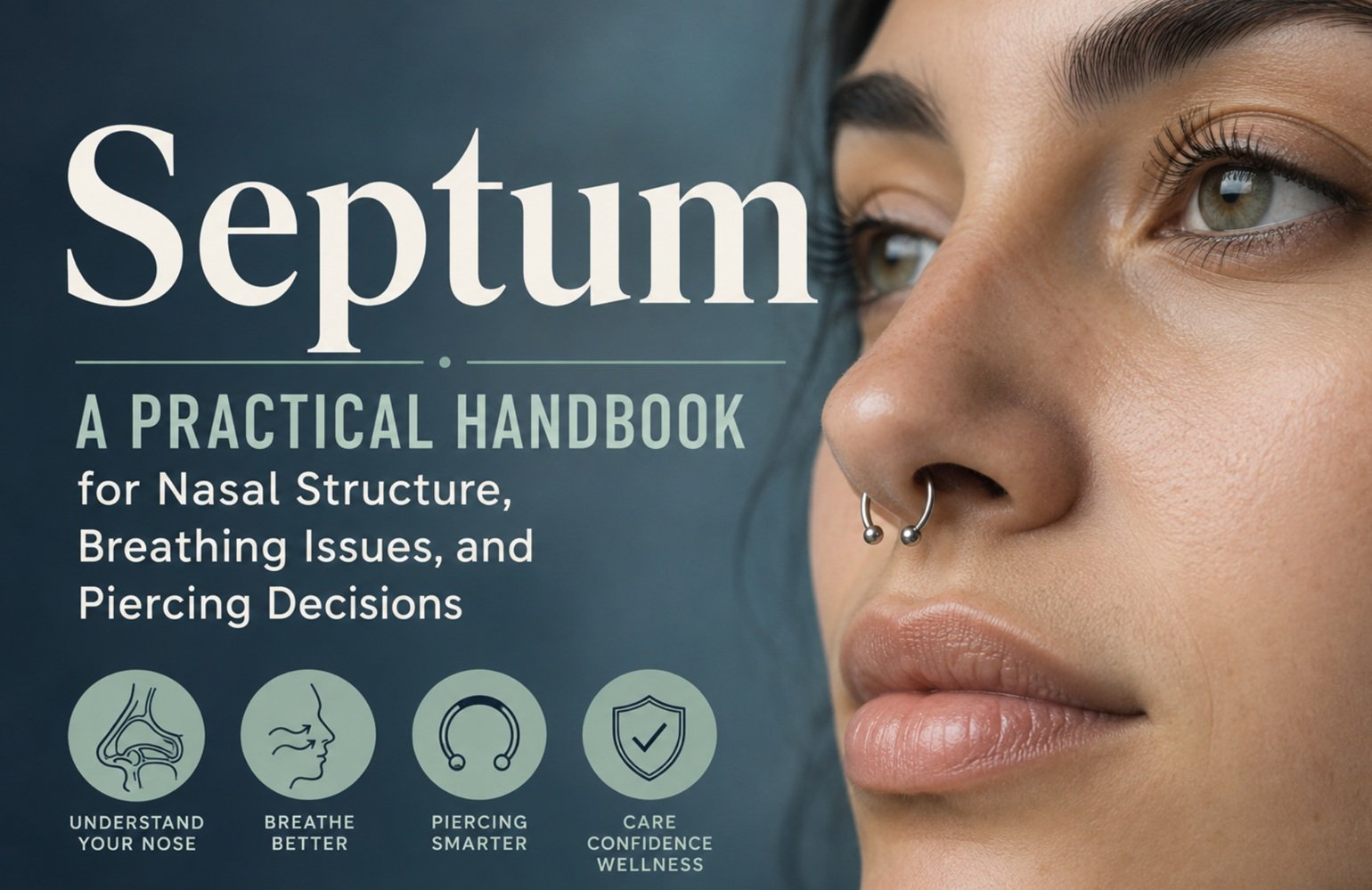
The septum sits at the center of your nose, quietly influencing how you breathe, how your face looks, and whether a septum ring will sit comfortably or cause trouble. For some people it’s simply part of normal anatomy; for others it’s the source of chronic congestion or the foundation for a favourite piercing. This handbook focuses on real-world decisions: understanding what your septum does, recognising when it’s part of a problem, deciding if surgery is worth it, and choosing piercings safely.
Understanding the Septum as a Central Support
Inside your nose, the septum works like a central support wall that divides the nasal space into two parallel corridors. Each corridor has its own airflow, lining, and connections to the sinuses, and the septum helps keep them separate and stable.
From a structural point of view, the septum:
- Anchors the midline of the nose and contributes to facial symmetry.
- Provides a central plane around which other nasal structures are arranged.
- Helps maintain the shape of the nostrils and bridge by partnering with surrounding bones and cartilage.
Even when the septum isn’t perfectly straight-something that’s more common than many people realise-it can still function adequately if the overall space on each side remains reasonably open.
Components: Bone, Cartilage, and Soft Tissue
The septum is best understood by breaking it into three elements: hard frame, flexible front, and surface lining.
- The hard frame at the back and lower part of the septum connects with several facial bones, forming a rigid scaffold.
- The flexible front consists mainly of cartilage that shapes the lower and middle nose and responds slightly to everyday movement.
- The soft tissue lining covers both bone and cartilage, supplying blood flow, moisture, and a protective surface.
This combination explains why the bridge of the nose feels firm while the tip and front area can move slightly when pressed.
How the Septum Works with Other Nasal Structures
The septum rarely acts alone. Its impact depends heavily on nearby structures:
- Turbinates are curved shelves of tissue along the side walls that expand the surface area for warming and filtering air.
- The nasal valve region, near the front of the nose, is the narrowest part of the airway and plays a major role in how easy breathing feels.
- The sinus openings drain mucus into the nasal cavity, and their relationship with the septum and turbinates affects whether secretions clear smoothly or get trapped.
When these parts are in harmony, airflow feels effortless. When any one of them-especially the septum-shifts or swells, breathing can quickly feel compromised.
How Septal Changes Show Up in Everyday Life
You don’t need imaging to suspect that your septum might be playing a role in your symptoms. Common patterns include:
- One side of the nose that always feels more blocked, even on “good” days.
- Difficulty breathing through the nose during exercise despite good cardiovascular fitness.
- Recurring sinus pressure on the same side of the face.
- Mouth breathing or dry mouth, particularly at night.
- Snoring that seems tied to nasal stuffiness.
These experiences don’t prove that the septum is the sole culprit, but they do suggest that structural factors deserve a closer look.
- Read more: Septum
Structural Problems: Deviation, Gaps, and Trauma Effects
Different structural changes can affect the septum, each with a different impact.
Bent or Off-Centre Septum
A bent or off-centre septum narrows space on one side of the nose. It may present as a smooth curve or as sharp angles and spurs that protrude into the airway. People often become aware of it after:
- A blow to the nose from sports or accidents.
- A long history of “one-sided” congestion that never fully clears.
- Noticing that one nostril feels significantly weaker when they test airflow side by side.
Hole in the Septum
A hole in the septum creates a direct opening between both sides of the nasal cavity. Rather than narrowing space, it introduces new airflow patterns, which can result in:
- Audible whistling during breathing.
- Dry crusts forming near the edges of the hole.
- Local irritation.
Holes can develop after trauma, surgery, certain chronic conditions, or prolonged exposure to substances that irritate or damage the lining.
Blood Collection Inside the Septum
A blood collection inside the septum often follows an impact to the nose. If blood accumulates between the cartilage and its lining, the swollen area can block airflow and threaten the long-term health of the cartilage. Prompt medical assessment is important when sudden blockage and tenderness follow an injury.
Decision Table: Self-Limit, See a GP, or See an ENT?
When nasal symptoms appear, you’ll often wonder how far to go with evaluation. The table below offers a simple starting framework.
| Situation | Likely First Step | Why This Makes Sense |
| Mild, short-term congestion with a clear cold or flu | Self-care and monitoring | Viral illnesses often resolve without specialist input. |
| Seasonal stuffiness with sneezing and itchy eyes | GP or allergy-focused care | Patterns point toward allergies rather than pure structure. |
| One nostril persistently worse for months | ENT consultation | Long-term asymmetry suggests structural involvement. |
| Repeated sinus infections on the same side | ENT and possible imaging | Local drainage problems often involve septal or turbinate changes. |
| Sudden blockage and pain after nose injury | Urgent medical review | Trauma raises the risk of internal bleeding and cartilage damage. |
This isn’t a substitute for medical advice, but it helps frame next steps when symptoms persist or escalate.
How Specialists Evaluate the Septum
When you visit a specialist, the assessment usually follows a logical path:
- History: You’ll discuss when symptoms began, how they’ve changed, and what seems to make them better or worse.
- Visual examination: The nose is inspected externally and internally, often with simple tools to spread the nostrils.
- Endoscopic view: A thin camera may be gently inserted into the nose to examine deeper areas, including the septum, turbinates, and sinus openings.
- Additional tests: Imaging can be used when sinus disease or unusual anatomical variations are suspected.
The aim is to separate structural problems from those driven primarily by mucosal swelling or systemic conditions.
Managing Septal-Related Symptoms Without Surgery
For many people, managing the environment inside the nose goes a long way, even when the septum isn’t perfectly aligned. Common strategies include:
- Regular use of saline rinses or sprays to clear mucus and irritants.
- Topical nasal sprays prescribed to reduce chronic swelling.
- Addressing allergic triggers through avoidance or medication.
- Adjusting bedroom humidity and sleep position to support nasal breathing.
If these measures significantly reduce symptoms, surgery may not be necessary, even if a deviation is present.
When Structural Correction Becomes Reasonable
Surgery comes into consideration when structural issues are clearly limiting airflow or causing repeated problems that don’t respond adequately to conservative measures. Key indicators include:
- Persistent obstruction confirmed on examination.
- Notable impact on quality of life, including exercise tolerance and sleep.
- Repeated sinus infections linked to anatomical narrowing.
- A clear match between the problem area and what can be safely corrected.
The specific operation that targets the septum aims to reposition or reshape it internally, preserving external appearance as much as possible unless combined with cosmetic changes.
Breathing Outcomes: Realistic Expectations
Many people hope that correcting a septal problem will completely transform their breathing. While improvements can be significant, expectations are more realistic when you consider that:
- Other structures (turbinates, nasal valve, sinuses) may also contribute to symptoms.
- Existing conditions such as allergies or chronic rhinitis usually still need ongoing management.
- Some changes, such as snoring or sleep-disordered breathing, may involve areas beyond the nose.
Thinking of structural correction as one piece of a broader breathing plan usually leads to better satisfaction with results.
Cost, Coverage, and Practical Planning
Financial considerations matter when surgery is involved. In practice:
- Procedures aimed at improving airflow or treating recurrent sinus disease are more likely to be considered medically necessary.
- Cosmetic-only operations typically fall outside standard insurance coverage.
- Combined functional and cosmetic plans require clear documentation, cost estimates, and explicit conversation about expectations.
Before making a decision, many people request itemised information about fees, potential insurance contribution, and follow-up costs.
Septum Piercing: Anatomy Meets Aesthetics
Using the septum as a piercing site means relying on its front soft tissue area as a secure anchor for jewelry.
How Piercers Navigate Septal Anatomy
Professional piercers:
- Identify the softer band of tissue just below the cartilage at the front of the septum.
- Aim to avoid dense cartilage and bone, focusing instead on the central soft “window” that allows a cleaner puncture.
- Consider nose shape, septal alignment, and previous injuries before choosing the exact point and angle.
This process helps keep the piercing comfortable, more stable, and less disruptive to the underlying structure.
Personal Suitability Considerations
Not every nose is an ideal candidate for the same piercing. Factors that influence suitability include:
- Degree of septal deviation and how it affects the central soft area.
- History of nasal surgery, which may shift available tissue.
- Baseline sinus and mucosal health.
- Preferences regarding jewelry visibility and lifestyle practicality.
Discussing these aspects with both a piercer and, when needed, a medical professional helps avoid unpleasant surprises.
Comparing Septum and Other Facial Piercings
Choosing between different facial piercings is partly aesthetic and partly anatomical. The table below highlights practical differences.
| Aspect | Septum Piercing | Nostril Piercing | Other Nose Piercings |
| Visibility | Can often be concealed by flipping jewelry | Constantly visible on one side | Varies by placement and jewelry style |
| Interaction with glasses | Minimal direct contact | Closer to frame rests, especially near the bridge | Depends on location |
| Exposure to makeup and masks | More central, less direct contact | High exposure to cosmetics and face coverings | Variable, site-dependent |
| Healing challenges | Internal environment, moisture and mucus | External exposure, risk of bumps | Depends on tissue and surroundings |
Thinking about how each piercing will interact with daily habits-work, sport, clothing, and cosmetics-helps narrow choices.
Septum Piercing Care from Day One
Effective care starts immediately after the procedure:
- Follow your piercer’s instructions for cleaning, usually involving a gentle saline routine.
- Keep hands and products that touch the area as clean and simple as possible.
- Avoid twisting and playing with the jewelry, especially in the first weeks.
- Watch for signs of irritation, such as persistent redness, heat, or unusual discharge.
Most early issues can be minimised with consistent routine and prompt attention to changes.
Piercing and Nasal Health: Balancing Style and Comfort
Having a septum piercing doesn’t automatically mean you’ll develop nasal or sinus problems. However, certain scenarios deserve caution:
- A history of significant nasal surgery may change the tissue landscape.
- Recurrent, severe sinus issues can make any new piercing more delicate to manage.
- Activities with frequent facial contact (contact sports, some occupations) raise the risk of snagging or impact.
Being honest about your health history and lifestyle helps your piercer advise whether a septum piercing is likely to work smoothly for you.
Frequently Asked Questions
Does every bent septum eventually require surgery?
Many people live comfortably with a septum that isn’t perfectly straight. If symptoms are mild, intermittent, or respond well to non-surgical measures like nasal sprays and rinses, surgery may never be needed. Procedures are generally reserved for situations where clear structural narrowing causes ongoing problems that significantly affect daily life, such as persistent obstruction or repeated sinus infections.
Can nasal exercises or breathing techniques straighten the septum?
Breathing practices and nasal exercises can improve how you use your airway and may reduce the subjective sensation of congestion, but they cannot physically reshape bone and cartilage. These methods are best seen as supportive tools that complement medical or surgical management, not as structural fixes. They can still be valuable in enhancing comfort, particularly when combined with allergy control and general nasal care.
s it safe to have a septum piercing if I also have chronic sinus problems?
Many people with mild or well-controlled sinus issues tolerate septum piercings without major trouble, but the risk profile is higher when infections are frequent or severe. The internal environment around the piercing may be more reactive, and episodes of inflammation can make healing slower or less predictable. Discussing your sinus history with your piercer-and, if necessary, a healthcare provider-helps you weigh whether timing and placement are appropriate.
Will correcting a septal problem change the shape of my nose on the outside?
Procedures focused solely on the internal septum aim to adjust the central wall while preserving external appearance. However, because the septum contributes to overall support, some subtle changes in contour are possible, especially if significant reshaping is required. When external appearance is a concern, it’s important to ask your surgeon how the planned work might interact with the nose’s visible structure and whether combined functional and aesthetic planning is advisable.
Can I keep wearing my current glasses immediately after septal surgery?
It depends on frame weight, nose shape, and surgical detail. Many people can wear glasses soon after surgery, but the nose is often sensitive for a period, so lightweight frames and careful positioning are recommended. Surgeons sometimes advise temporary adjustments, such as resting frames slightly differently or using alternative supports. Clarifying this point before your procedure ensures you’re prepared for any short-term changes.
What signs suggest my nasal blockage is more than just a seasonal allergy flare?
ry dischaBlockage that stays roughly the same regardless of season, weather, or exposure to common triggers is more suggestive of structural factors. A strong tendency for one nostril to be consistently worse, visible nasal crookedness, or repeated sinus infections on the same side also point towards anatomy playing a significant role. Allergy-type symptoms-itchy eyes, sneezing, waterge-can coexist with structural issues but respond differently to treatment.
How long should I plan to take it easy after septal surgery?
Most people need a short period of reduced activity while immediate healing takes place. Gentle movement, such as walking, can resume relatively quickly, but strenuous exercise, heavy lifting, and activities that risk facial impact are usually restricted for longer. Your surgeon will provide a timeline tailored to your procedure, but planning for several weeks of extra caution is common.
Does a septum piercing hurt more than other facial piercings?
Pain perception varies, but many describe septum piercing discomfort as sharp and brief, followed by pressure and tenderness. Because the piercing targets thinner tissue rather than thick bone or cartilage, the immediate sensation is often different from nostril or ear cartilage piercings. The first days tend to be the most noticeable, with proper aftercare playing a big role in how quickly tenderness fades.
Can septal problems cause headaches without obvious congestion?
Yes, structural changes can sometimes contribute to facial pressure or headache even when congestion feels modest. Airflow turbulence, altered sinus drainage, and strain on surrounding tissues may generate discomfort around the nose, forehead, or cheeks. If headaches occur frequently and seem linked to nasal or sinus sensations, a specialist evaluation can help determine whether structure, mucosa, or other factors are involved.
Is it better to correct septal issues before or after getting a septum piercing?
There’s no one rule for everyone. If structural problems significantly limit breathing or sinus health, addressing them first may make long-term nasal comfort more predictable. On the other hand, people with stable, moderate deviations who are otherwise healthy may choose to pierce without prior correction. The best sequence depends on symptom severity, personal priorities, and the advice of both medical and piercing professionals.