The hyoid bone is a small u-shaped bone that can be found in your neck. This bone provides several functions including: assisting you to swallow, speak, and breathe. Most of the bones in the human body are connected to other bones; however, the hyoid bone does not connect to any other bones. Muscles and ligaments assist with supporting this bone.
I’m pretty sure you never think about what this bone has to do with being able to speak and eat. Even though it is so important in helping to coordinate everything related to your everyday activities of talking and eating.
By knowing where it is located, what it looks like and how it works we can understand why certain kinds of neck injury/illness can result in throat pain.
What Is the Hyoid Bone?
The hyoid bone is a very small, u-shaped bone located in front of the upper part of your neck. This bone provides support for your tongue, and contains many other muscles which provide assistance with swallowing and speaking.
What makes it unusual is its independence from the rest of the skeleton.
Most of the bones in your body are attached to other bones at joints. Your muscles and ligaments help keep your hyoid bone where it belongs. These same tissues allow the hyoid bone to move as you swallow and engage in various other movements.
Although it is a small structure, it coordinates the movements of many other larger structures within the throat.
Where Is the Hyoid Bone Located?
The bone sits beneath your lower jaw and above the thyroid cartilage which forms part of your voice box.
Its position allows it to support the tongue while interacting with muscles in the throat.
Position in the Neck
The hyoid bone is located at about the same height as the third cervical vertebra, however, the location of this bone can vary depending on an individual’s posture and movement.
The location of this area is in the space that exists between the lower jaw (or “chin”) and the protruding portion of cartilage that most people refer to as the “Adam’s Apple.”
In this area, you will likely feel some motion during the process of swallowing, but locating the correct bone using your fingers can be challenging.
Relationship to the Tongue and Larynx
Several muscles connect the hyoid to the tongue, lower jaw, and larynx.
These connections help coordinate tongue movement with the elevation of the voice box during swallowing.
The bone also provides stability for muscles involved in producing speech.
Hyoid Bone Anatomy and Structure
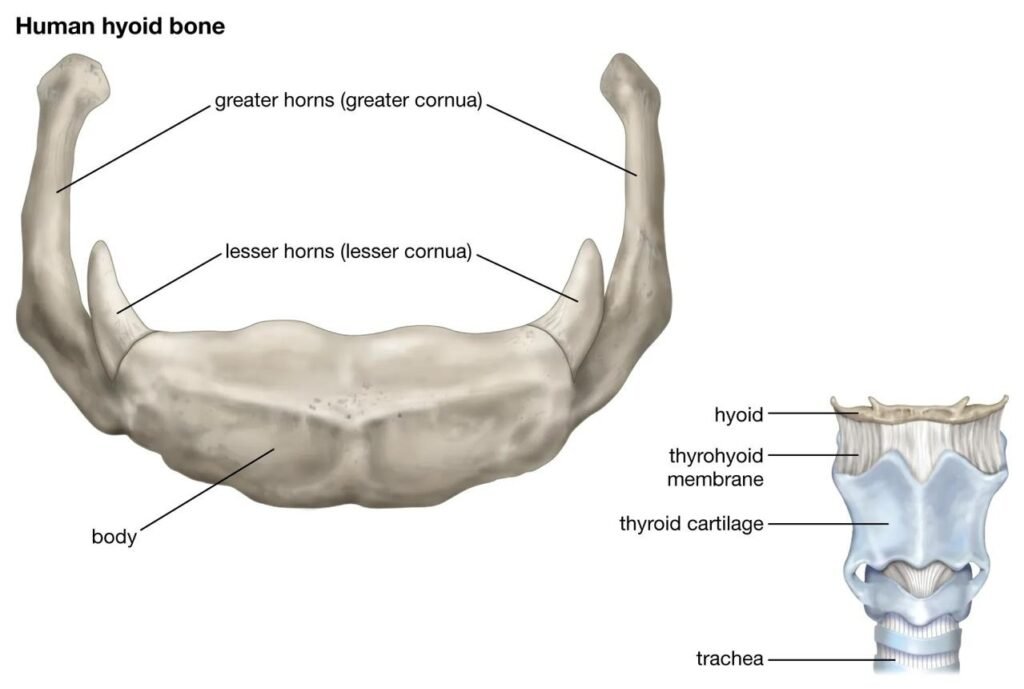
The hyoid has a central body and two pairs of horn-like projections. Each part provides attachment points for muscles or ligaments.
Body of the Hyoid Bone
The body forms the broad central portion.
It faces forward and provides attachment points for muscles that help move the tongue, jaw, and throat.
Greater and Lesser Horns
The greater horns extend backward from both sides of the body.
The smaller horns are short projections near the junction between the body and greater horns.
Both structures contribute to the attachment of surrounding soft tissues.
Muscles Attached to the Hyoid Bone
Two major muscle groups interact with this structure:
- Suprahyoid muscles: Located above the bone, these help elevate it during swallowing.
- Infrahyoid muscles: Located below the bone, these help lower or stabilize it.
Together, these muscles coordinate movements required for swallowing and speaking.
What Does the Hyoid Bone Do?
The hyoid has several functions involving the tongue, throat, and upper airway.
Role in Swallowing
When you swallow, muscles pull the hyoid upward and forward.
This movement helps elevate the larynx and supports the opening of the upper esophageal sphincter, allowing food and liquids to pass toward the stomach.
Poor coordination of these movements may contribute to swallowing difficulties.
Support for Speech and Tongue Movement
The hyoid provides a stable attachment point for muscles that control tongue position.
These movements help shape sounds during speech.
Although it does not directly produce sound, its relationship with the larynx and tongue makes it important for normal speaking.
Role in Airway Function
The bone supports structures associated with the upper airway.
Its position and movement contribute to normal throat mechanics during breathing and swallowing.
Researchers also study the relationship between hyoid position and certain sleep-related breathing disorders.
What Causes Hyoid Bone Pain?
Pain near the hyoid can develop from muscle problems, inflammation, or injury. However, many conditions affecting the throat can produce similar symptoms.
Muscle Strain and Inflammation
Muscles surrounding the bone may become irritated or strained.
Discomfort may increase when swallowing, turning the head, or moving the tongue.
Muscle-related pain does not necessarily indicate damage to the bone itself.
Hyoid Bone Syndrome
Hyoid bone syndrome is an uncommon condition associated with tenderness near the greater horn.
People may experience persistent throat or upper neck pain, especially during swallowing.
Diagnosis requires a medical examination and assessment for other possible causes.
Neck Injury or Fracture
A fracture is uncommon because the lower jaw and surrounding tissues provide some protection.
However, direct neck trauma, including forceful blows or strangulation, can damage the bone.
Possible symptoms include severe pain, difficulty swallowing, voice changes, and breathing problems.
A suspected fracture requires prompt medical attention.
Common Symptoms of Hyoid-Related Problems
Symptoms vary depending on the underlying condition.
Some possible signs include:
- Pain in the upper front of the neck
- Discomfort when swallowing
- Tenderness beneath the jaw
- Pain during certain head movements
- A clicking sensation in the throat
- Changes in voice after an injury
These symptoms are not specific to hyoid disorders.
Throat infections, muscle tension, and other neck conditions can produce similar complaints.
How Are Hyoid Bone Problems Diagnosed and Treated?
Treatment depends on whether the symptoms come from muscle irritation, an underlying medical condition, or a structural injury.
Physical Examination and Imaging
A healthcare professional usually starts by asking about symptoms and examining the neck.
They may check for tenderness, swelling, and pain associated with movement.
If necessary, imaging tests such as X-rays or CT scans can help identify fractures or structural abnormalities.
Treatment Options Based on the Cause
Mild muscle-related discomfort may improve with rest and appropriate pain management.
For persistent symptoms, treatment might include:
- Clinician-guided physical therapy
- Anti-inflammatory medication when appropriate
- Specialist evaluation for swallowing difficulties
- Targeted injections for selected diagnosed conditions
- Surgery in rare, carefully evaluated cases
Treatment should address the confirmed cause rather than throat pain alone.
When Should You See a Doctor?
Occasional mild neck discomfort may resolve without treatment, but persistent or worsening pain deserves medical attention.
Schedule an evaluation if swallowing regularly causes discomfort, unexplained tenderness continues, or symptoms interfere with eating.
Seek emergency care immediately if you experience breathing difficulty, rapidly increasing neck swelling, or serious swallowing problems, particularly after a neck injury.
Do not press or manipulate the neck after significant trauma.
Frequently Asked Questions (FAQs)
Can you feel your hyoid bone in your neck?
This organ is occasionally positioned under the lower portion of the oral cavity (the mouth), and can move as an individual swallows. Because of its position, people without a good understanding of human anatomy will find it challenging to locate exactly what part of the body contains this organ.
Why is the hyoid bone unique?
This one single bone is the only bone in the entire human body which has no direct contact with any other bone (no articulation). It hangs from your neck muscles and ligaments.
Can the hyoid bone cause throat pain?
Yes, injury can lead to throat pain. There are also less common causes of throat pain, such as Hyoid Bone Syndrome. However, most instances of throat pain occur due to other reasons. This makes it critical to receive an accurate diagnosis regarding the reason for your pain.
What happens if the hyoid bone breaks?
A neck fracture may result in severe neck discomfort, difficulty swallowing and/or alterations to a person’s speech patterns. Additionally, certain types of neck injuries are capable of blocking a person’s airways, thus requiring prompt medical attention.
Does the hyoid bone move when swallowing?
Yes. Swallowing involves coordinated movement of the swallowing muscles, causing the larynx (voice box) to move upwards and forwards. These movements protect the airway from having foreign matter enter it, as well as providing access for food to enter the esophagus.

0 Comments